
The Second Life of a Tree
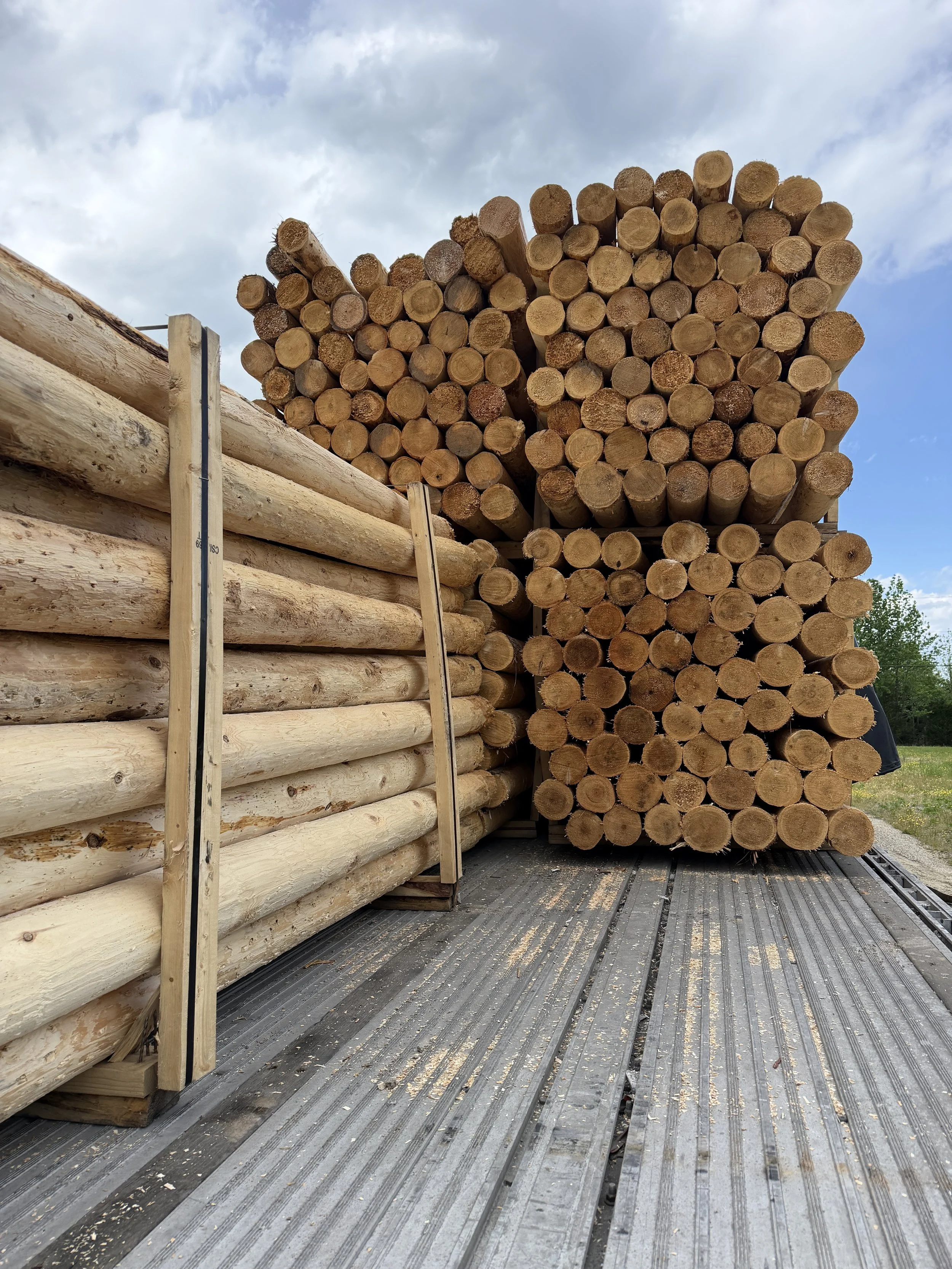
The fenceposts have arrived.
375 of them, cut from Eastern White Cedar forests in Ontario and Quebec, stacked high on a truck. Offloaded by an earnest 16-year-old learning the forklift trade, his daddy watching from the edge of the truck.
Before they become fence lines, gateways, and boundaries on this land, they were trees shaped by long winters, short summers, thin soils, rocky ridges, wetlands. Eastern White Cedar is an old northern tree, native to the forests of northeastern North America. It often grows where other species struggle. On exposed shorelines, limestone soils, swamp edges, and cold uplands.
It is not the fastest tree in the forest, but it is among the most enduring. In difficult places it grows slowly, laying down tight annual rings that create dense, stable wood. Some wild cedars have lived for centuries.
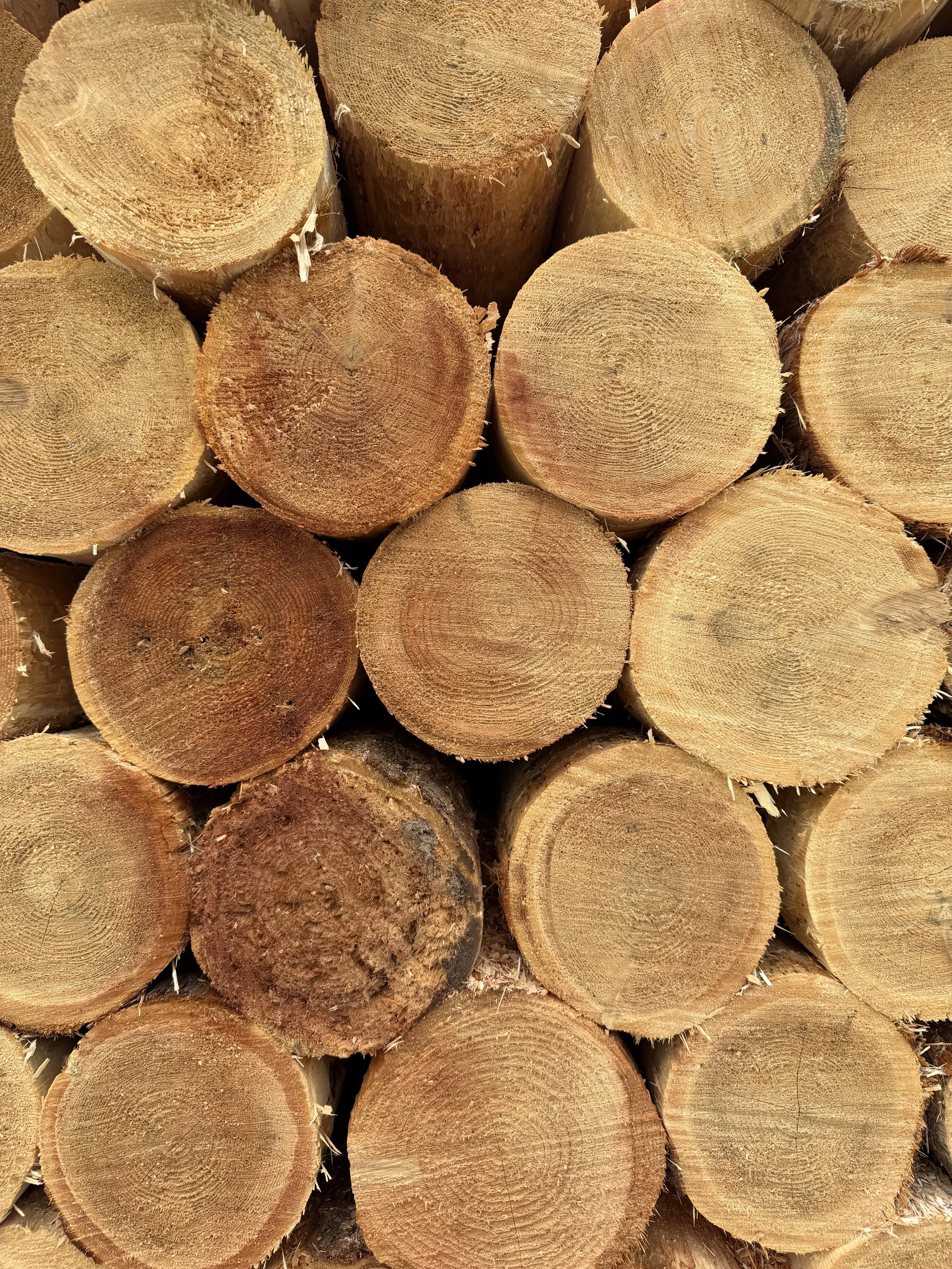
That slow growth matters a lot actually. Wood is built from elongated cells whose walls are composed largely of cellulose, hemicellulose, and lignin. In slower-grown trees, those growth rings are often tighter, which can contribute to dimensional stability and strength relative to weight. Cedar is not the hardest wood available, but it is remarkably intelligent. Time becomes structure.
When we began designing the ranch, we knew the fences mattered. Not only because horses depend on safe, visible, trustworthy boundaries, but because fences are one of the most constant visual experiences on the land. They run through every field, greet every visitor, frame every photograph, and communicate what kind of place this is. We did not want something disposable. We did not want something pretending to be wood.
So we chose cedar.
Eastern White Cedar has long been valued for outdoor use because it is naturally rot resistant. Its heartwood contains compounds the tree evolved for its own protection. Natural oils and extractives that help resist fungi, insects, and decay. In other words, the tree manufactures its own defense system. Durability without asking chemistry to do what biology already solved.
It is also remarkably stable. And remarkable efficient. Cedar is strong for its weight, easier to handle than many hardwoods, and less prone to dramatic warping as seasons change. All of which matters for a working farm where hundreds of posts must be set, aligned, braced, and trusted for years. Good materials save labor on the front end and headaches on the back end. We expect we’ll be looking at these same posts for several decades.
And cedar comes from a forestry tradition that can be thoughtful rather than extractive. In well-managed forests, mature trees are selectively harvested, crowded stands are thinned, and younger trees rise into new light. A healthy forest is not a warehouse. It’s a living system that renews itself over time.
But utility was only part of the decision.
Wood gives you a different feeling than industrial substitutes. It weathers instead of peels. It silvers instead of rusts. It belongs among pasture grasses, tree lines, birdsong, and mud after rain. Cedar will not remain frozen in time. Sun will soften its tone. Moss may visit the shaded side. They won’t last forever, of course. A steel post may outlast a cedar post. But a cedar fence returns to earth as it goes. A different kind of longevity.
We often talk about doing the best we can with nature’s gifts. Not exploiting them. Not sentimentalizing them. Working with them carefully and gratefully and and with respect for what they already know how to do.
These posts will soon hold lines, welcome guests, and shape movement across the land. What began as forest becomes boundary and guide. The second life we get to witness.
Every story here is written by us. No AI involved.
