Tapping Trees
In a tiny window in late winter, you can actually see trees wake up.
The days grow longer but the nights still freeze. The red maple senses the shift and starts to move sugar, stored all winter, from its roots upward through its vessels. Sometimes it is kind enough to let you take a little.
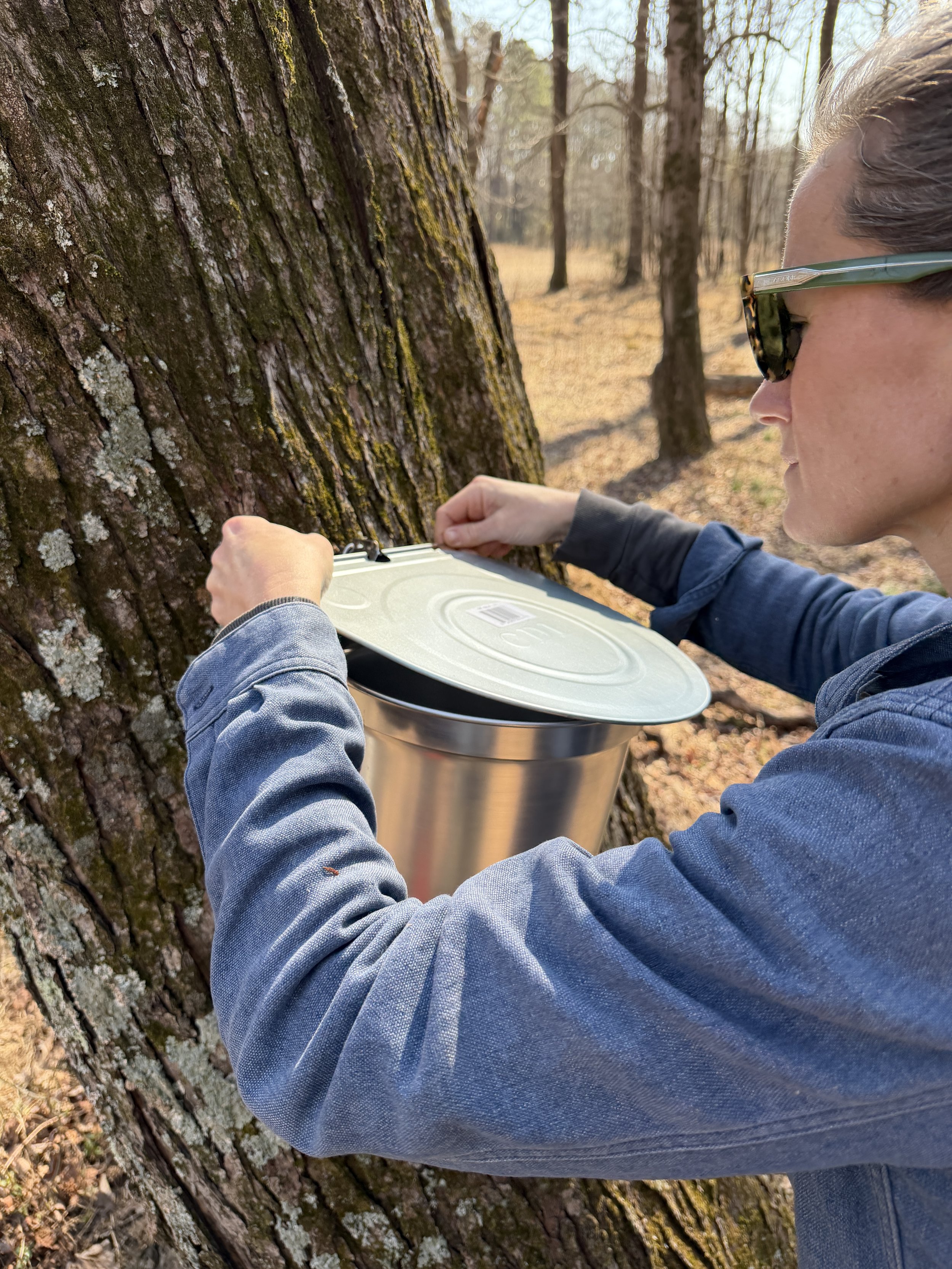
So you drill a hole the diameter of a pencil. Gently tap in a spout. Hang a bucket.
The hole heals in a season. The tree is unbothered. What you collect—thin, watery stuff that smells of the forest—you boil down to a deep amber syrup that might end up on Sunday pancakes, or, in our house, drizzled with sumac over roasted carrots.
This is, I've come to think, about as clean a model of resource stewardship as nature offers.
Most extraction metaphors are adversarial. We take; The thing taken-from diminishes. The mine depletes. The well runs dry. The fishery collapses. Stories of subtraction that infiltrate our companies too. The employee, as we now say often, burns out.
The maple doesn’t think that’s quite right. The tree is not diminished by tapping. The maple gives sap the way it gives shade. Its generosity is a product of its aliveness. The more it flourishes, the more it gives freely.
For anyone managing people, capital, creative energy, the maple has some suggestions:
>>> The size of extraction matters morally and practically. 1%. Through the smallest viable hole, while the tree grows upward, outward, downward. But cut too deep, too often, the tree stops producing. See: the 996 trend, perpetual restructuring that somehow always finds more to cut, quarterly growth demand from a decimated workforce. This is not tapping the maple.
>>> Timing is everything. The sap runs in a painfully short window. If you miss it, there is nothing to collect. If you hit it... flow. See: The leader who invests in an off-site that will generate more ideas than another innovation sprint pressed into already-crushed calendars never could. The sap runs when the tree has rested, not when a bucket arrives with a target.
>>> The tree's health is inseparable from its system. The maple stabilizes soil, feeds insects, shelters birds, stores carbon that keeps the whole system viable. Reciprocity is the rule of natural design. See: the best, smartest orgs contribute to their communities and ecosystems.
We will tap again next year. You can join. The children will watch the first drops fall into the bucket. Three of us will stand around one of the oldest trees, stretch out our arms, and still our fingers will not touch.
And I will think, not for the first time, that the tree is teaching a graduate seminar, and we are lucky to be enrolled.